Psychology
coping with anxiety
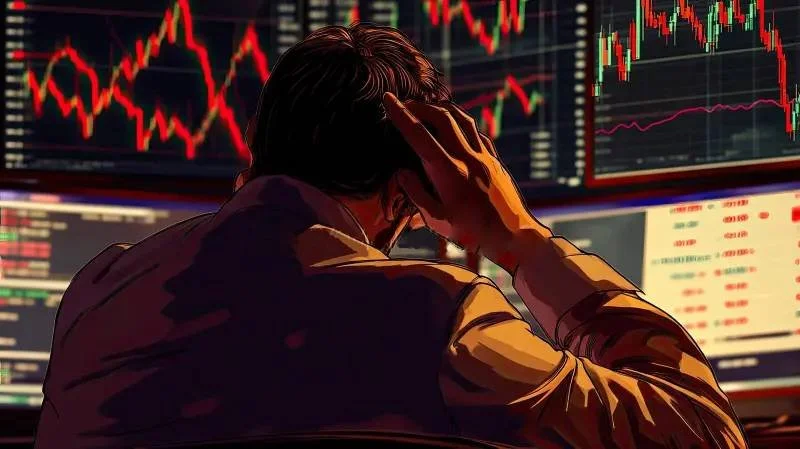
You stare down a chart, see a good setup, feel fairly confident about what the price will do in the next couple of minutes or even days, you have the money to trade it. You have seen this happen before, you are certain that money can be made taking a position in this setup, but something holds you back. There’s this weird overwhelming sense of uncertainty not about the technicals of the play, but about your money. That is called anxiety. The American Psychological Association defines anxiety as an emotion characterized by apprehension and somatic symptoms of tension in which an individual anticipates impending danger, catastrophe, or misfortune. However, the anxiety traders experience when executing positions is not just general anxiety. In fact, I would even go as far as to say that it isn’t even fear of losing money that causes traders to experience this psychological phenomenon. You see, most traders that experience trading anxiety generally derive it after having taken a significant loss in the past, usually as a result of a trade in which risk management was minimized or outright ignored and thus the resulting losses were so great that the created a form of apprehension to trading itself. Thus, one can conclude it isn’t just the fear of taking a loss that incites the anxiety itself, because that wasn’t present before. It’s the potential damaging effect to the confidence that holds back traders. It isn’t the potential for loss because clearly, as initially stated, the trader can often feel very confident about a potential setup in a chart, and the fear of losing money on it wouldn’t affect them had they not experienced an event that had significant psychological repercussions. What is happening is much deeper than that. Trading anxiety is the unconscious fear that arises from a lack of confidence in oneself. This chapter will tackle a lot of subjects at once, from deep psychological concepts to practical methodologies which can be used to fully heal from this affliction and become a well-balanced trader once again.
Defining Trading Anxiety
Trading anxiety is described as a deep-rooted fear that causes traders a form of apprehension to take action on a setup, they would otherwise feel confident about. The fear is hard to fully explain in the moment, because rationally speaking, the trade makes sense, but there is an overwhelming sense of dread traders feel if the trade goes wrong. Let’s first properly categorize this issue in its proper scientific form. What you are experiencing is a contextual form of performance anxiety. Performance anxiety is defined as outsized feelings of fear, nervousness and dread that surround completing specific tasks, aka “stage fright.” It manifests in people as a "fight or flight" response that prepares you for danger. Performance anxiety can be extremely limiting, preventing people from achieving their full potential. Performance anxiety can also be described as the fear of being judged or failing when you’re in the spotlight, which is the more narrowed definition which I want to focus on. Trading anxiety is contextual performance anxiety. It is a deep-seated fear of losing money in a trade, not because of the realization of the loss itself, since that can easily be mitigated by proper risk management and measured exposure by dollar amount. No, trading anxiety is more fundamental to the way you think and feel about yourself. Trading anxiety arises from the fear that a trading loss can validate a negative perception of yourself. It’s self-imposed pressure to perform that creates mental stress and doesn’t allow you to act on opportunity.
Dissecting Pressure
Let’s take a small step back and try to recognize and eliminate performance anxiety in your trading by changing how you interpret losses, streaks, and internal pressure. I want you to imagine a new med student walking into surgery. They know their stuff, but the pressure is overwhelming. They overthink every step, every word, stumble over their answers and leave feeling like they blew it. Now, in contrast, imagine a surgeon walking into the surgery room. They are confident even when the stakes are high, and yet they don’t panic. They remain calm, focused and confident. They adjust when they have to and never lose control of themselves. What is the difference between these two individuals? Simple: The med student is focused on how they are being judged while the other is focused on what needs to be done. That’s it. The med student knows what he has to do, but his inability to master himself creates a mental blockade that doesn’t allow him to operate at full efficiency. The surgeon, by contrast, is in full control of himself and is focused not on what others might think of him or what a botched surgery will do to his career, but instead, he is fully focused on what needs to be done. A good and consistent trader thinks and approaches his craft like the surgeon.
Let’s do another example, shall we? This time, we will use traders in context.
Picture a new trader sitting at his desk as the opening bell hits. He sees a stock ripping on news and immediately feels his chest tighten. He slams a market order, gets a horrible fill, and starts staring at every tick like its life or death. The pressure eats him alive, and within minutes, he’s shaken out at the worst possible moment.
Now imagine a seasoned scalper who has traded thousands of open-bell moves. The same news drop hits. The stock spikes, then pulls back sharply. Instead of panicking, he breathes, watches liquidity, marks the key level, and waits for his setup. When the pattern forms, he executes without emotional noise.
Same chart.
Different mind.
One is focused on how much money they might lose. The other is focused on following their process. Great traders think like the calm scalper. Most traders don’t blow up because of market volatility, news catalysts, or algos. They blow up because their internal pressure becomes louder than the chart. You start the session relaxed. Then you take one loss. Maybe two. Suddenly you’re tense. You begin forcing trades. You click too fast. You widen stops. You size up to “make it back.” Every candle feels personal. You don’t have a strategy problem. You have a pressure problem. And its way more common than traders admit.
Dr. Brett Steenbarger puts it perfectly:
“Traders engage in catastrophizing… they regard losses as a threat to their self-perceptions or livelihood.”
It’s not the red trade that hurts. It’s the story you attach to it. The narrative you build in your head is incredibly consequential to your success. In order to fix trader anxiety, this is the very first thing we must tackle. You see, elite performers—whether they’re traders, athletes, or chess players—are not trying to be perfect. They’re trying to stay present in the moment. It doesn’t matter what tomorrow will bring, nor what happened yesterday. What matters is the now, in this moment. When things go wrong, they don’t panic or spiral. They reset and go back to what they trust—their rules, their structure, their preparation. Great traders do the same, and so should you. They don’t chase the dopamine of a big win or collapse under the weight of a sudden loss. They follow their edge, trade the playbook, and let the probabilities handle the rest.
Steenbarger again nails it:
“What gives expert performers the confidence to stay absorbed is not positive thinking. Rather, it’s knowing they can handle setbacks when those occur.”
If you want to trade like a pro, that’s the mindset to internalize. The most damaging belief in trading is the idea that your P&L is a reflection of your worth. People tend to think that winning trades means they are smart, capable, talented, and that when they take losses, they are idiots or amateurs. That mental model is poison. You are not your P&L. You are the discipline that generates it. Your losses don’t define you. Your response to them does. By acting on the idea that losses present opportunity for you to learn when revisiting what happened, you take a good part of the threat out of losing.
Losing trades is a very big part of trading, and one that you have to condition yourself to accept and more importantly, be comfortable with. Think of it as the cost of doing business in a sense. Professional traders don’t avoid losses, they learn from them as much as possible. They extract as much information from those trades that go wrong, because information is the most vital thing you can get. Acknowledge and understand that even the best traders in the world, the best algorithms in the world barely beat the SP500 over the long term. Some years they outperform the market by huge amounts, and other times they underperform it by large amounts as well. People with decades worth of experience, with teams fully researching stocks and market news take losses all the time, so why are you trying to measure yourself against an idea that is technically and practically impossible? Be humble enough to allow yourself to fail, and be strong enough to establish healthy parameters so that those loses don’t hurt your portfolio excessively.
When Winning Makes You Nervous
It surprises a lot of traders, but some of the worst meltdowns happen after a string of wins, not during a drawdown. A few green days in a row feel great at first; your confidence spikes, your account hits new highs, and you feel like you’re finally in rhythm with the market. But then a strange shift happens beneath the surface. Instead of trading freely and logically, you start tightening up. You become hyper-aware of your P&L and more protective of the gains you’ve made. You begin sizing up out of excitement, taking setups that you’d normally ignore, and holding losers far past your stop because you “refuse to end the day red.” You chase moves you had no intention of touching simply because you don’t want to ruin the streak you’ve become emotionally attached to. This is the hidden trap of success: the pressure to maintain it becomes greater than the pressure to achieve it. As Brett Steenbarger puts it, “Sometimes the performance anxiety occurs when a trader is doing well and now tries to take more risk by trading larger positions.” What started as a rational state of flow quickly morphs into a frantic attempt to protect a fragile emotional high. The trader shifts from executing a playbook to defending an identity, and that, more than any single bad trade, is what causes everything to unravel.
Most traders love logging their wins, recapping their best trades, or posting big P&L screenshots. But the true growth doesn’t come from studying the victories—it comes from dissecting the days that broke your composure. The days you panicked. The days you hesitated. The days you traded emotionally instead of systematically. Start documenting the moments that triggered your worst impulses: the trades that made you freeze, rush, size up impulsively, or second-guess your edge. Write down what you were thinking before, during, and after the trade. Identify what emotionally “hooked” you, whether it was market behavior like a sharp reversal, or internal pressure like the fear of losing a streak. Finally, write what you wish you’d done differently. Over time, these emotional autopsies start revealing patterns—certain setups that tilt you, certain times of day that trigger FOMO, certain thoughts that consistently precede your worst decisions. Once those patterns become visible, you can interrupt them before they take over. This is where psychological edge begins—not in knowing more about the chart, but in knowing more about yourself.
When anxiety starts creeping into your trading—when your chest tightens, your mind rushes, or your decisions feel emotionally charged—you can use a simple mental reset to break the cycle before it controls your execution. The routine has three steps, and each one is designed to pull you out of fear and back into clarity. First: Name the Thought. Write it out exactly as it appears in your head. It might be something like “If I lose again, I’ll ruin my month,” or “I’m on fire, I can’t break the streak,” or “This trade has to work.” Naming the thought neutralizes the emotional fog around it. Second: Flip the Script. Reframe that thought into a truth that grounds you instead of pressuring you. Tell yourself, “If I lose, I learn faster,” or “The streak doesn’t matter—the process does,” or “No single trade defines me.” This step shifts you from panic-based thinking into objective thinking. Third: Return to Execution. Ask the questions that bring you back into your playbook: “Would I take this setup ten times in a row?” “Is my risk clearly defined?” “Am I trading my edge, or am I trying to fix my emotions?” Once your mindset is aligned with your rules and your risk is defined, the outcome of the trade stops mattering. You’ve already won because you regained control of yourself.
Here’s the mindset shift that dissolves performance anxiety at its core: it becomes infinitely easier to trade well once you accept that it’s okay to mess up. The fear that grips traders isn’t usually fear of losing money, it’s fear of what the loss means about them. But trading has never been about flawless execution. It’s about staying resilient when the market tests you, maintaining composure when uncertainty spikes, and navigating your own internal storms without losing your center. The goal isn’t perfection; the goal is stability. Growth happens when you give yourself the freedom to make mistakes and the structure to learn from them. When you stop treating losses as personal failures and start treating them as feedback, everything changes. Performance anxiety loses its power. Your decisions become cleaner. Your execution becomes steadier. And you finally start trading from a place of control instead of fear. That’s where real progress begins.
Tackling anxiety
Your ability to tackle complex problems like trader anxiety depends on your ability to adhere to specific conducts and make habits out of them. Trading anxiety can be easily remedied by a myriad of ways. In this section, we will cover some methods that are very efficient and recommended. They help limit losses and remove all emotion out of a trade.
1. Use Written Structure to Eliminate Anxiety
A highly effective way to reduce trading anxiety is to build a fully documented strategy. This includes writing down every detail of your system, outlining your rules, and creating a clear pre-trade checklist. Many traders also benefit from printing or saving chart examples of valid setups so they can visually compare live price action to their criteria.
When a potential setup appears, pause and run through the checklist. Match the live chart to your examples and confirm each condition step by step. This removes uncertainty — you’re no longer trading based on emotion or impulse, but on a defined edge executed consistently.
During losing streaks or periods of mental fatigue, returning to your written rules is especially valuable. Reviewing your documented process helps re-center your mindset and often reveals small details you may have drifted away from, which can explain inconsistent results.
This method functions as a grounding mechanism, reinforcing clarity, discipline, and objectivity in your execution.
2. Start With Small Size to Protect Both Capital and Psychology
Trading with small position sizes is one of the most reliable ways to maintain emotional stability. If a trader can consistently grow an account using small size, scaling up later becomes a natural progression — the process remains the same, only the numbers change. But if a trader cannot succeed with small size, scaling up will only amplify the underlying issues.
Most severe trading blowups stem from two causes:
Lack of a real edge — an inability to profit even with minimal size.
Refusal to acknowledge the problem, leading to premature scaling and large losses.
Small size preserves mental health, reduces emotional intensity, and allows traders to think clearly. Psychological capital is just as important as financial capital — and starting small ensures both are protected while you refine your edge.
3. Use Drills to Desensitize Fear of Entries and Stop-Outs
A practical way to reduce anxiety around entering trades or getting stopped out is through repetition-based training, sometimes called Volatility Ping-Pong. Using a paper-trading platform, traders place limit entries, stop losses, and profit targets every time a setup appears. Lower timeframes, such as 15-second or sub-minute charts, offer rapid repetition because fractal price action creates frequent setups.
The goal is not to be right; it’s to become desensitized. After seeing dozens of setups form and resolve in a single session, the emotional weight of any individual stop-out disappears. The drill builds confidence, objectivity, and speed of execution by removing the emotional sting attached to each outcome.
4. Evaluate Execution, Not P&L
A core principle in reducing trading anxiety is shifting focus away from your P&L and toward the quality of your execution. After each trade, a useful question is:
“Did I execute this setup correctly according to my rules?”
If the answer is yes, then both wins and losses serve the same purpose; they reflect how your edge performed, not how you performed as a trader. Measuring yourself by execution rather than outcome removes pressure, encourages consistency, and supports long-term growth.
For traders who prefer a more structured mental framework, this principle can be applied in two ways:
Purpose-driven angle: Treat trading as a responsibility where discipline matters more than outcome, reducing the temptation to force low-quality trades.
Mechanical angle: Trade like a robot: emotionless, rule-based, and systematic. Robots don’t hesitate, panic, or chase; they follow instructions. Emulating this mindset helps eliminate fear and greed.
The Cheat Code
Everything we just discussed above are great methodologies to follow in order to remove the anxiety out of the picture. However, some people tend to experience very heightened levels of anxiety. The fear and even trade-paralysis they experience can’t be easily remedied. There are two ways in which to tackle this. If the fear of loss is too severe, I highly recommend you to trade on a funded account. Prop firms are great in that they allow you to trade futures without risk to your capital. The way they work is you generally pay a fee, usually between $25 to $50 per account, and then you must pass an evaluation where you trade and make a certain amount of money. Once you pass that evaluation, they allow you to trade on a live funded account where you keep 90% of all profits. The only company I know that seems legitimate is TopStep, which has been around for a very long time and has a large amount of people that trade on them. Traders that suffer from steep trading anxiety and are held back from trading by the sheer fear of loss should consider opening an account and trading futures on that. The only money they technically lose is that which they use to buy a prop account. As far as I know, many of the traders I have come across that tried this have said that this completely took of the pressure to perform and they could simply focus on the technicality of the trades. If you need something to completely reset yourself, I highly encourage that you check out TopStep or any other trading prop firm and see if that can help you out. Losses on those accounts are never passed on to you, and once you pass the evals, like I said, 90% of the profits are yours.
The second way to tackle this is by taking time off from trading for a couple of weeks and then returning to trade on a paper trading account. Paper trading account are simulated accounts that let you trade with fake money. You can test and measure your trading strategy, or outright develop one, and practice for a long time before moving on to trading with real money. If you are experiencing steep trading anxiety, I highly encourage you to take some time off from trading altogether, come back refreshed and paper trade. After a couple of weeks, you can then try a prop firm and get started making money.
Closing thoughts
You need a hobby. So many traders become obsessed with trading to the point that they often ignore other parts of their lives. To be the best version of yourself, you need to be a well-rounded individual. This means engaging in other fun activities outside of trading and work or school that allow you to cool off. While you structure your trading strategies, also make sure to structure time to step away and live a little. Movies, books, video games, vacations, traveling, hockey, weightlifting, martial arts, painting, racing are all great hobbies to partake in. Remember what we talked in the beginning, trading isn’t about defining yourself, so don’t become obsessive over it when you take a bad trade and get burned. This is something that most traders experience. Be grown and rational enough to understand that this is not healthy, that the best path forward is to study exactly what went wrong and take measures to ensure it doesn’t happen again. Small measured losses will happen here and there, big losses are the result of a deviation in your trading strategy, or a signal that your trading strategy has a significant flaw that must be addressed. Find the problem, create a solution and move on.
It took me a long time to believe in myself; way longer than I am comfortably talking about. But let me tell you, once I did, success followed. Believe in yourself. Be kind to yourself. We often like to punish ourselves mentally and emotionally when we screw up. Don’t do that to yourself. You will have to spend a lot more time fixing yourself before being able to tackle your trading issues. Instead, press on the matters that you can control, your trading style, strategies and risk management. If I was able to make a turnaround, so can you.