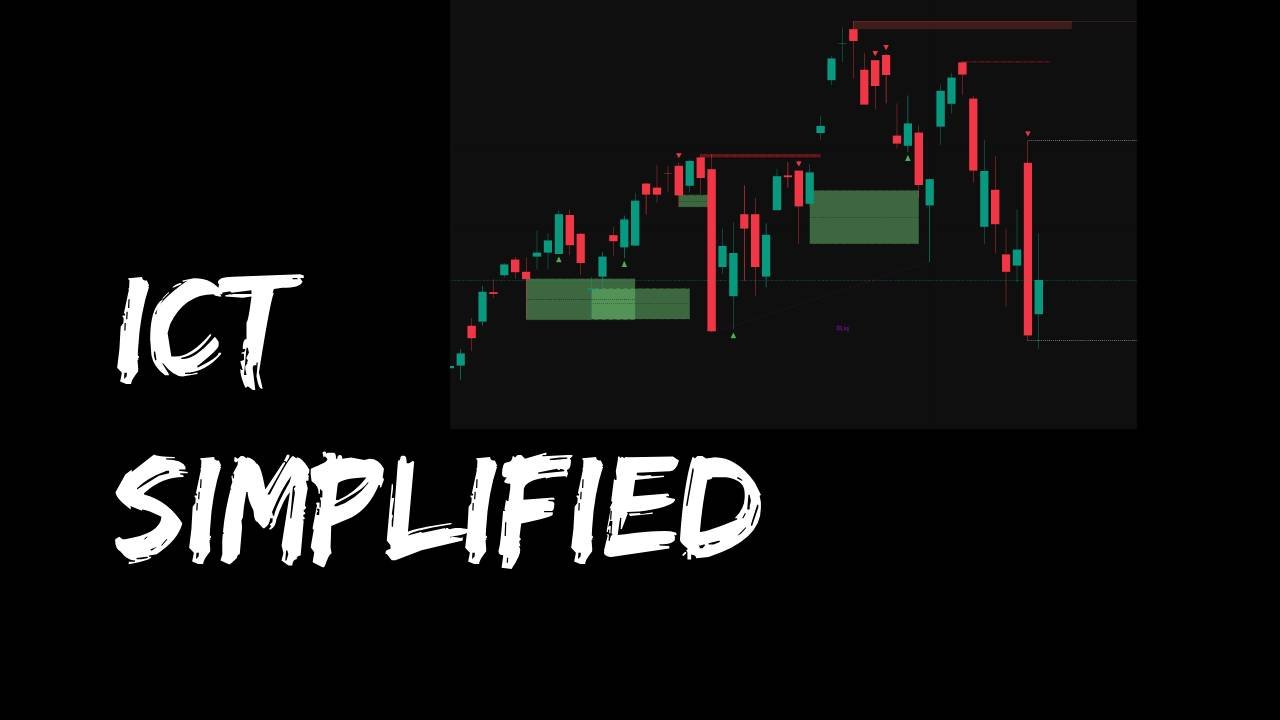
ICT Strategy
Step inside the framework that turned raw charts into a roadmap—this is ICT trading, explained with clarity.


ICT INTROduction
What is ICT?
ICT, which stands for Inner Circle Trader, is a methodology that focuses on understanding institutional traders’ behavior to find high-probability trading opportunities. In other words, ICT is a framework that reveals how smart money manipulates, moves, and manages price. By studying liquidity, market structure, and institutional behavior, traders learn to anticipate moves with intention instead of guessing. It’s a strategy built on understanding the “why” behind price action; not just reacting to it. ICT Traders’ methodology is to approach trading with an emphasis on understands how larger market participants tend to operate in order to reverse-engineer institutional trading strategies. Analyzing how major market players accumulate positions, manipulate liquidity and execute large orders is key in this approach, which is why detailed analysis of market structure, time frames and price action are so vital.
The Concept in ICT Trading
The ICT methodology is built around a simple but powerful idea: markets are not random. Price is shaped, targeted, and often manipulated by large institutional participants whose orders move the market far more than retail traders ever could. These institutions—banks, hedge funds, algorithmic market makers—create the underlying rhythm of price. ICT teaches traders how to read that rhythm.
Instead of reacting to candles or chasing indicators, ICT traders analyze the intentions behind price movement. They study how institutions generate liquidity, where they seek to fill large orders, and how they engineer the market to trap retail participants on the wrong side of a move. ICT provides a framework that exposes the “footprints” left behind by smart money, allowing traders to follow the flow instead of fighting it.
At the heart of this methodology is the belief that price is continuously cycling through phases of accumulation, manipulation, and distribution. Institutions accumulate positions when volatility is low and retail traders are complacent. They manipulate price to trigger stops, collect liquidity, or induce traders to enter prematurely. And once positioned, they distribute into the resulting momentum, driving price toward predetermined liquidity pools.
By understanding these phases, ICT traders aim to align themselves with the true direction of institutional order flow. Rather than guessing where the market might go, they learn to anticipate where liquidity must be taken. That shift—from prediction to understanding—allows for clearer entries, cleaner exits, and higher-probability setups.
In essence, ICT trading transforms the market from something chaotic into something deliberate. It teaches traders to see the structure behind price action, recognize the motives of institutional players, and position themselves to capitalize on those moves with precision and confidence.
Key Elements of ICT Trading
ICT trading revolves around identifying the recurring behaviors of institutional participants and understanding how their actions shape market structure. Instead of focusing on indicators or reaction-based strategies, ICT breaks the market down into the underlying mechanics that drive price.
Order Blocks
Order blocks are zones where institutional traders have built sizable positions, often during periods of consolidation. These areas act as the origin of major market moves. When price returns to an order block, it often reacts sharply because unfinished institutional orders are still resting there. ICT traders use these zones to anticipate high-precision entries and reversals.
Liquidity Zones
Liquidity is the fuel institutions need to execute large orders. Retail stop losses—clustered above highs, below lows, or around obvious support/resistance levels—create pockets of liquidity that institutions seek out before driving price in the intended direction. Identifying these zones helps traders anticipate both manipulation and the real move that follows.
Smart Money Footprints
Institutions leave subtle traces behind through the timing, structure, and magnitude of their moves. ICT traders study these “footprints,” especially during high-impact trading windows like the London Kill Zone or New York session open. These footprints reveal when large players enter, trap retail traders, or engineer liquidity sweeps.
Methods Used in ICT Trading
ICT provides a detailed model for decoding how price behaves, why it behaves that way, and where the most probable trades exist.
1. Market Structure Analysis
At the core of ICT strategy is the ability to read market structure with precision. Traders examine how the market transitions from one directional phase to another—higher highs and higher lows in bullish environments, lower highs and lower lows in bearish ones. These shifts reveal where institutions are accumulating, distributing, or preparing to reverse price. Understanding structure allows traders to forecast where price is likely to break, retrace, or consolidate.
2. Liquidity Pools
Liquidity pools represent zones where institutional traders expect a concentration of pending orders—mostly stop losses from retail traders. Price often gravitates toward these zones because they provide the liquidity institutions need to enter or exit major positions. ICT traders wait for liquidity grabs—momentary spikes above highs or below lows—and then position themselves in the opposite direction when the real move begins.
3. Time and Price Theory
ICT places strong emphasis on timing. Certain market sessions consistently produce high-probability setups because of the influx of institutional order flow.
Examples include:
London Open: Known for sweeps and initial directional bias.
New York Open: Often delivers continuation moves or reversals.
London Close: A time when institutions rebalance positions, creating sharp volatility.
ICT traders aim to execute only during these high-liquidity windows to maximize the probability and clarity of their trades.
4. Risk Management Strategies
A defining feature of ICT strategy is its disciplined approach to risk. Stop losses are placed at logical institutional levels—beyond order blocks, below liquidity zones, or past market structure breaks—rather than arbitrary pip counts. Traders aim for asymmetric reward-to-risk profiles, which means even modest win rates can produce impressive long-term results.
Pros and Cons of ICT Trading
Pros of ICT Trading
1. Alignment with Institutional Movements
ICT training teaches traders to follow the same liquidity-based logic used by institutional players, reducing the likelihood of getting caught in traps or false breakouts.
2. High Precision Entry & Exit Points
By focusing on order blocks, liquidity grabs, and displacement, traders can pinpoint extremely accurate entry levels with minimal drawdown.
3. Adaptability Across Markets
ICT concepts apply to forex, indices, crypto, futures, and stocks, making the methodology flexible and accessible to all types of traders.
4. Strong Focus on Risk Management
The framework encourages tight stop-loss placement at logical institutional levels, improving reward-to-risk ratios and preserving capital.
5. Deep Understanding of Market Mechanics
ICT goes beyond surface-level technical analysis and teaches the underlying logic of market movement — liquidity, manipulation, accumulation, and distribution.
6. Works in Trending and Ranging Markets
Because the strategy revolves around liquidity and market structure, traders can navigate both trending and consolidating environments with confidence.
7. Reinforces Discipline and Patience
ICT favors quality over quantity. Traders learn to wait for clean setups rather than forcing trades during low-probability conditions.
8. Indicator-Free Clarity
ICT strips charts down to pure price action, making analysis cleaner and more intuitive without relying on lagging indicators.
9. Scalable for All Trading Styles
Whether scalping, day trading, or swing trading, ICT concepts adapt well across multiple timeframes.
10. Strong Educational Community
ICT has one of the most extensive learning libraries available, supported by countless examples, breakdowns, and real-time studies.
11. Potential for High RR Trades
Sharp entries from optimal zones allow traders to target long-distance liquidity levels with high reward potential.
Cons of ICT Trading
1. Steep Learning Curve
ICT involves a lot of interconnected concepts — order blocks, fair value gaps, SMT divergence, kill zones, timing models — making the learning process lengthy.
2. Time-Consuming
Many setups appear only during specific sessions like London or New York. Traders may wait long periods for clean confirmation.
3. Overcomplication
Beginners often attempt to use every model at once, resulting in chart clutter, hesitation, and confusion.
4. Easy to Misinterpret Without Experience
Incorrectly identifying structure shifts or liquidity targets can lead to poor decision-making.
5. Strict Time Requirements
Optimal setups frequently occur at precise times of day. Traders with inflexible schedules may miss the highest-probability moves.
6. Emotional Difficulty
ICT requires patience, confidence after liquidity sweeps, and disciplined execution — traits that take time to build.
7. Continuous Chart Monitoring
ICT setups often unfold quickly around session opens. Traders may need to be actively watching, not set-and-forget.